Spot the hidden cost.
See why mock-heavy tests turn every agent refactor into a review burden, and how a fully green suite can still hide a bug.
Join Younes Jaaidi to see how your testing strategy becomes your review strategy: structure-insensitive tests and Charted Coding to beat review fatigue in AI-assisted development.
No fee, no ticket needed. Register with your e-mail and we will send you the link to join. With Younes Jaaidi · Software Engineer and trainer at Marmicode, Google Developer Expert.

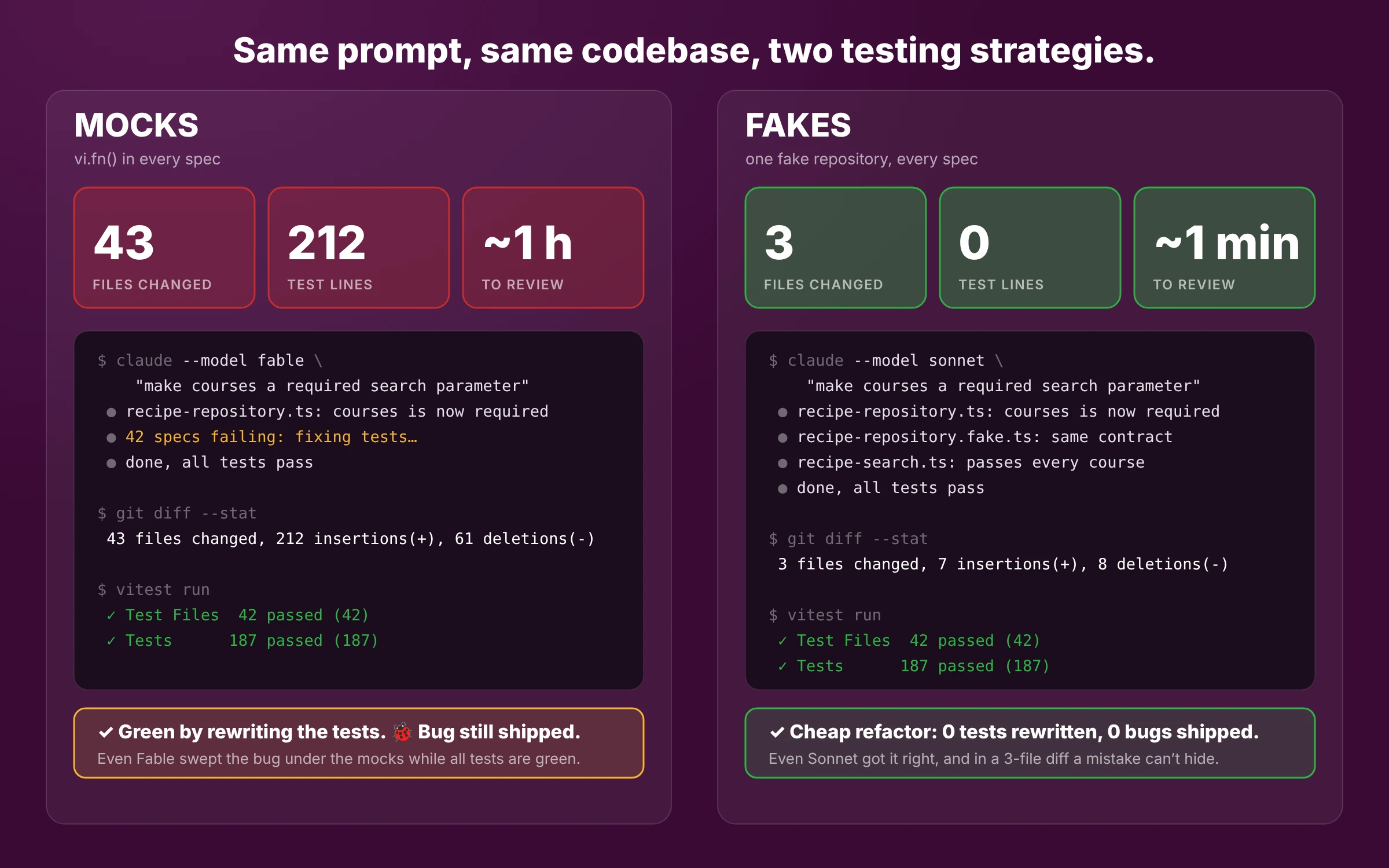
We run one change, "make courses a required search parameter", twice on the same Angular app tested with Vitest. Mock-heavy tests force a 43-file rewrite and still ship the bug. Behavior-focused tests with fakes touch 3 files, rewrite nothing, and catch it.
One hour with Younes Jaaidi on why mock-heavy tests make every agent refactor a review burden, how behavior-focused tests with fakes beat it, and how Charted Coding puts testing at the center of AI-assisted development. Online, no fee, no conference ticket needed.
Enter your e-mail below. That's all.
Loading the registration form…
See why mock-heavy tests turn every agent refactor into a review burden, and how a fully green suite can still hide a bug.
Learn the patterns that let tests survive refactors and point at real bugs: fakes over mocks, object mothers, readable setup.
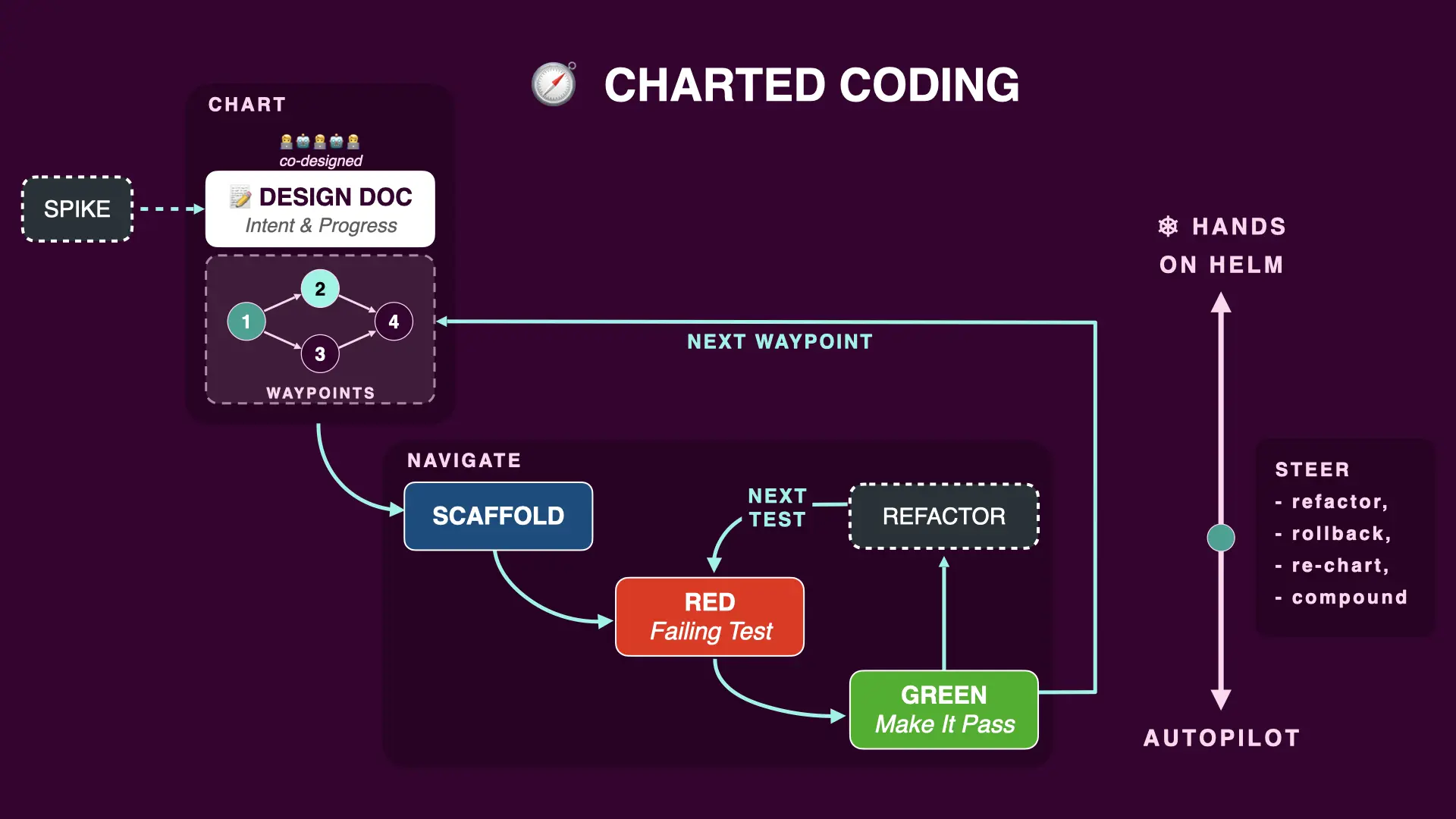
Meet Charted Coding, a methodology where the tests carry the load while you review only what matters.
A focused, demo-driven session: we run the same change on two testing strategies, review both diffs, then make testing the center of the workflow with Charted Coding. You can follow along without coding.
Mocks Tax Every ChangeWhy mock-heavy tests make every agent refactor expensive, and why the bill now lands in review.
Run it on Vitest with mocks: a 43-file diff, tests rewritten to stay green, and a bug swept under a mock.
Run the same change with fakes and object mothers: a 3-file diff, nothing rewritten, the bug caught.
Compare which diff you can actually review and which suite points at the real bug.
Design doc, scaffold, red, green: a methodology that puts testing at the center so you review where it matters.
Wrap-up and where to take structure-insensitive testing and Charted Coding next.
A design doc to scaffold to red to green loop that keeps a human hand on the helm. You chart the intent and waypoints, navigate with failing then passing tests, and steer: refactor, rollback, re-chart or compound.

Software Engineer & trainer at Marmicode · Google Developer Expert
Younes is a software engineer, trainer and author behind Marmicode. A Google Developer Expert, he helps teams write tests that actually protect them: behavior-focused, refactor-proof, and honest about bugs.
In this session he puts two testing strategies head to head on the same AI-assisted change, then shows how Charted Coding keeps testing at the center so review stays sane.
Yes, completely. There is no fee and you do not need a conference ticket. Just register with your e-mail.
We run the same change twice on an Angular app tested with Vitest, once on mock-heavy tests and once on behavior-focused tests with fakes and object mothers, then compare the diffs and introduce Charted Coding.
No setup is required. This is a live demonstration, so you can follow along without coding. Basic familiarity with testing and Angular will help you follow the examples.
Developers, tech leads and teams who rely on tests and AI assistants, and who feel the review burden that comes with mock-heavy test suites.
The webinar takes place on Thursday, 5 November 2026 at 17:00 CET (Europe/Warsaw). The live session lasts one hour.
Register with your e-mail in the form above. You will receive the link to the live session by e-mail, plus a reminder before we start.
Takes 10 seconds. You only need an e-mail address.
Save my free seat