
AI Poland 2026 · Speaker
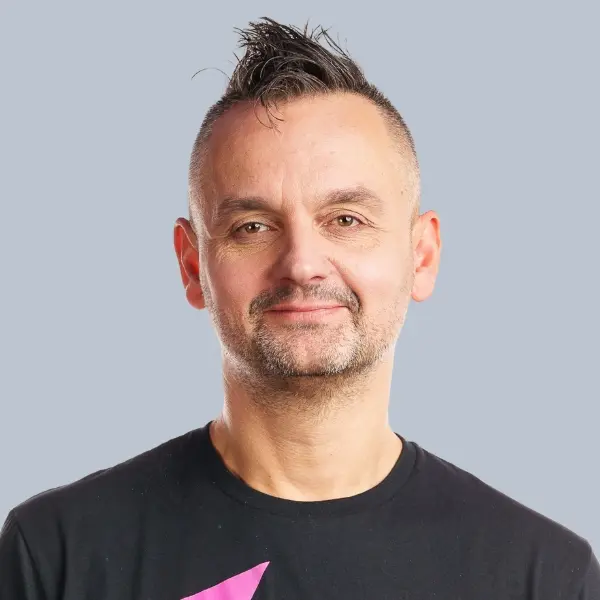
Greg Radzio
CTO, Lowgular | Poland
Talk
Your Agents Are Fast. Your Company Isn't.
Talk at AI Poland
Thursday, Nov 19, 2026 · 14:10 - 14:30
Where
Onsite at Multikino Złote Tarasy, Warsaw
· or join online
Most companies now have an AI strategy, but few can explain how it becomes measurable business value. After almost a year implementing AI agents inside a large enterprise digital-platform project, I have seen how making each specialist faster merely moves the bottleneck to the next human. Without a surrounding system, agents produce plausible-looking slop, growing review queues and more decisions than an organisation can safely process. This talk follows our progression from traces and reusable skills to purpose-built tools, deterministic verification and governed workflows, while examining how engineering, design, QA, product management must change around them. The difference between ten times more output and a genuine tenfold improvement is not the model, but the harness and operating system built around it.
About Greg Radzio
After 20 years in engineering — including CTO roles where I scaled teams, rescued legacy codebases, and watched good developers drown in process — I stopped asking “how do we ship faster” and started asking “what if the system shipped for us.”
That’s what I’m building now.
At Lowgular I design agentic engineering systems — not AI tools bolted onto existing workflows, but end-to-end pipelines where agents prototype, implement, test, and validate features while developers govern the system that does it.
The architecture looks like this:
This is the shift I’ve seen coming since Cobiro — where I took a codebase from maintainability rank D to A in 6 months while scaling the team from 3 to 30. Back then the governance layer was a human bottleneck. Now it’s the thing that makes autonomous delivery safe.
I work as Fractional CTO — embedded in your team for 90 days, designing and shipping the system, then handing it over to run.
If your team has AI tools but delivery hasn’t changed — that’s the problem I solve.
That’s what I’m building now.
At Lowgular I design agentic engineering systems — not AI tools bolted onto existing workflows, but end-to-end pipelines where agents prototype, implement, test, and validate features while developers govern the system that does it.
The architecture looks like this:
- Knowledge bases that give agents context: design system, architecture decisions, coding standards, test scenarios
- Agent workflows that execute feature delivery from prototype to PR
- Deterministic governance layers that catch drift before it reaches production: sensors, evals, visual regression, static analysis
- Feedback loops that make the system smarter over time — not the developer writing more code
This is the shift I’ve seen coming since Cobiro — where I took a codebase from maintainability rank D to A in 6 months while scaling the team from 3 to 30. Back then the governance layer was a human bottleneck. Now it’s the thing that makes autonomous delivery safe.
I work as Fractional CTO — embedded in your team for 90 days, designing and shipping the system, then handing it over to run.
If your team has AI tools but delivery hasn’t changed — that’s the problem I solve.
Greg Radzio in action
Learn from the Best Speakers 2026























Companies that support our community
Our Sponsors 2026
By becoming a sponsor of AI Poland, you gain a unique opportunity to showcase your company and products to hundreds of forward-thinking developers, engineers, and AI practitioners from across Europe.
This kind of exposure can drive meaningful interest in your solutions, help you connect with new business partners, and attract top tech talent.
To learn more about our sponsorship opportunities, please fill in the form.
Gold Sponsor

Gold Sponsor

Silver Sponsor

Silver Sponsor

Special Sponsor

Special Sponsor

Special Sponsor

Special Sponsor

Special Sponsor

ngGirls Sponsor

Stay in the loop Join our mailing list
Sign up to receive updates about AI Poland, including workshops, speaker announcements, ticket releases, AI Awards, expert interviews, CFP details, and other exclusive content. We won’t spam you — only thoughtfully curated updates we believe you’ll find truly valuable. You can unsubscribe at any time. More information available here.
- No spam
- Unsubscribe anytime
- Only the good stuff