
Tomasz Ducin
Independent Consultant, Architect, Developer & Trainer, Poland
Talk
Two Talks: Diving into the Heart of LLMs & Fundamental Patterns in Agentic AI Applications
Large Language Models are one of the fundamental pieces of the modern AI ecosystem - but hardly anyone understands how they actually work. It's a collective challenge, as it's very short sighted to rely your business and architecture on a technology that one might have a hardly any knowledge about.
And it is critical to build a proper understanding, as many good and bad ideas can be evaluated, thanks to seeing how the internals work. At least to some degree.
In this talk we dive into the heart of LLMs - from user's prompt, though tokenizers, embeddings, meeting the core - transformers - and finally output generation.
Talk 2: Fundamental Patterns in Agentic AI Applications
Agentic applications are just applications, though the underlying "service" they're using is somehow specific. There are specific database-related patterns, queue-related patterns etc - not to mention various challenges specific to each. And LLM-based systems are not different!
Both scientists and the industry have already identified some key advantages and issues in practical work with large language models. And hence, there's a handful of very practical patterns that help us overcome the limitations of the context window, issues with the quality of models and their high infrastructure costs. This talk is a distilled SOTA when it comes to practical Agentic Architecture.
About Tomasz Ducin
Ex-theater actor, probably addicted to coffee and certainly addicted to listening to music.
Workshop
Mastering TypeScript's Advanced Patterns for Hardcore Development - Master Class (stationary & online)
Key Takeaways:
1. Advanced Patterns Primer: Uncover patterns like branded types, value object, and configuring type compatibility that emerge from structural typing.
2. Branded Types: Learn to provide specific domain-related operations that don't easily interfere with primitives - and leverage this to make your app logic more robust and easier to maintain.
3. Type Predicates & Assertion Functions: Customize TypeScript's control flow and improve code inference to make your codebase more manageable.
4. Classical Patterns (Builder, Composite, Iterator, etc): Build on your knowledge of Generics to perform awe-inspiring feats of inference, developing entire data structures without manual type annotation.
5. External Libraries: Get down and dirty with external libraries, understanding how generics flow through them to debug type errors quickly.
6. Thinking on the Compiler Level: Understand the critical role of various TypeScript compiler internals, to understand the result and results, which are not explicitly written in your code.
What You'll Learn:
- Deepen your understanding of TypeScript's advanced features
- Navigate and resolve complex compiler errors
- Gain techniques for efficient domain modeling
- Master type controls to write cleaner and more reliable code
By the end of this hands-on workshop, you’ll be armed with a toolkit of advanced TypeScript skills and techniques, ready to tackle any coding challenge. Don't miss out on this opportunity to turbocharge your TypeScript game! 💪🤓
Workshop
Fundamentals of Software Architecture for AI-assisted Developers - Master Class (stationary & online)
We will cover the core principles of modular, scalable, and testable system design, and explore how AI tools—from copilots to code generators—impact architectural decisions. You'll learn how to design clean, evolvable codebases that embrace automation without losing control of structure, quality, or maintainability.
Through hands-on exercises and real-world case studies, you'll walk away with practical knowledge to apply in your daily work—whether you're building microservices, monoliths, or hybrid architectures powered by intelligent components.
What You'll Learn:
✔️ Core Architectural Patterns: Learn how to apply proven patterns like layered, hexagonal, and event-driven architectures in AI-supported workflows.
✔️ Designing for AI: Understand how AI assistants change the way we model, refactor, and document systems—and how to use them effectively.
✔️ Trade-offs and Boundaries: Make better decisions around coupling, cohesion, team ownership, and long-term evolution of codebases.
✔️ Architecture as Code: Discover tools and techniques for modeling and validating your architecture using modern developer workflows.
✔️ AI Integration Points: Explore where and how to integrate AI-powered services, models, and APIs within robust software architectures.
Who Should Attend:
Developers, tech leads, and architects who want to build strong architectural foundations while embracing AI-assisted tooling. No prior AI experience is required—just a passion for clean, thoughtful system design.
Future-proof your codebase and your career. Join us to master the fundamentals of software architecture for the AI-assisted era.
Tomasz Ducin in action
Learn from the Best Speakers

Łukasz Jaźwa
CTO, Synergy Codes & Tentaro | Poland
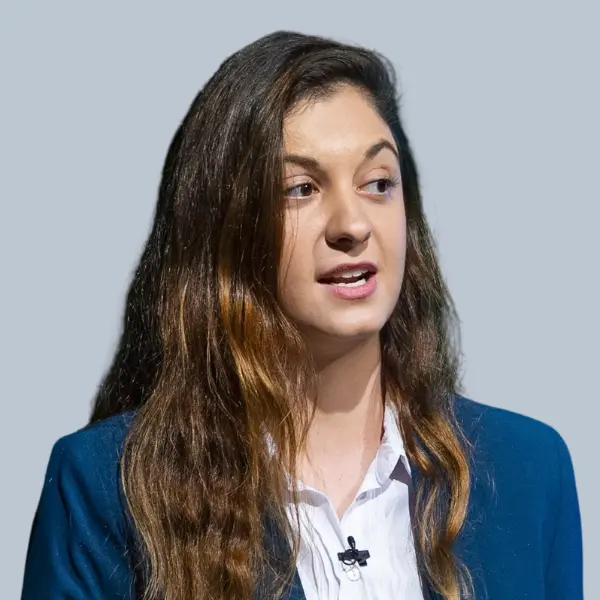
Stanimira Vlaeva
Staff Developer Advocate, MongoDB | Bulgaria

Illia Seleznov
CTO, Kinoa | Poland

Kasper Kulikowski
Senior Developer Relations Engineer, Google | Poland
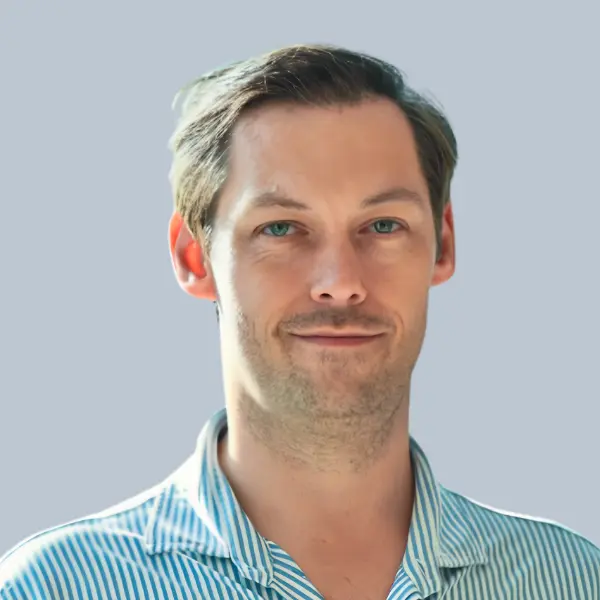
Greg Radzio
CTO, Lowgular | Poland

Manfred Steyer
GDE for Angular, softwarearchitekt.at | Austria

Michael Hladky
CEO, push-based.io | Austria

Alisa Duncan
Principal Developer Advocate, Okta | USA

Dr. Markus Nissl
CEO, datAInsights GmbH | Austria
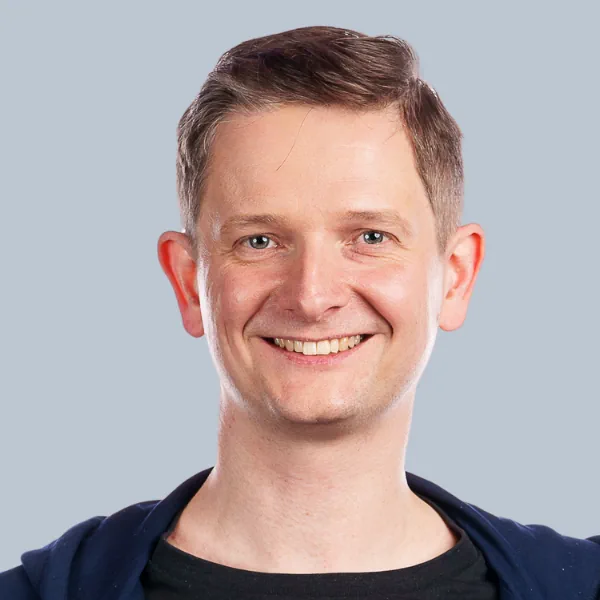
Łukasz Jancewicz
Staff Software Engineer, Google | Poland

Nir Kaufman
Tech Lead, Full-stack AI Engineer, GDE, Tikal | Israel
Tomasz Ducin
Independent Consultant, Architect, Developer & Trainer, Poland

Mateusz Jagodziński
Solutions Engineer, Synergy Codes | Poland
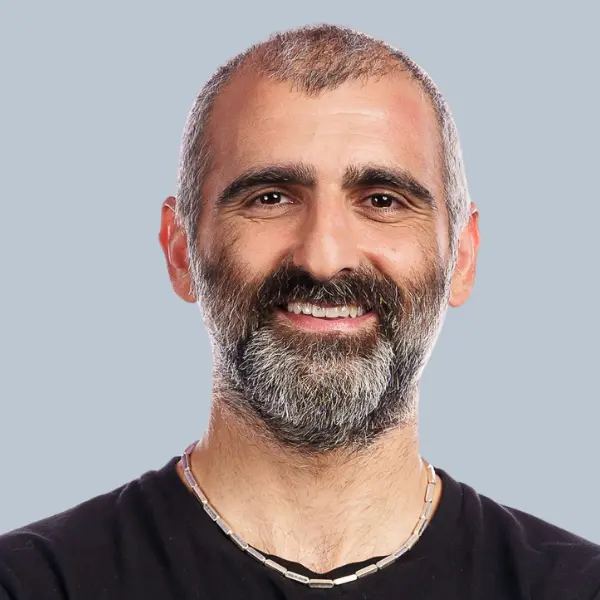
Eliran Eliassy
CEO, GDE, e-square.io | Israel
Younes Jaaidi
Software Development Cook, Teacher & Coach, GDE | France

Sebastian Witalec
Head of DevRel, Namespace Labs | Poland

Daniel Sogl
Head of AI Engineering & Developer Productivity, SHI GmbH | Germany

Julia Rapczynska
Full Stack Software Developer, Push-Based | Poland

Alex Okrushko
Senior Software Engineer, Snowflake | Canada

Julian Jandl
Engineering Manager, push-based.io | Austria

Dariusz Kalbarczyk
Google Developer Expert, Author, Podcaster, NG/JS/AI POLAND | Poland
Meet our first speakers for 2025! More to be announced soon. Interested in joining? Apply below!
Call For Papers 2025



Companies that support our community
Our Sponsors 2026
By becoming a sponsor of AI Poland, you gain a unique opportunity to showcase your company and products to hundreds of forward-thinking developers, engineers, and AI practitioners from across Europe.
This kind of exposure can drive meaningful interest in your solutions, help you connect with new business partners, and attract top tech talent.
To learn more about our sponsorship opportunities, please fill in the form.
Gold Sponsor

Gold Sponsor

Silver Sponsor

Silver Sponsor

Special Sponsor

Special Sponsor

Special Sponsor

Special Sponsor

Special Sponsor

ngGirls Sponsor

Stay in the loop Join our mailing list
Sign up to receive updates about AI Poland, including workshops, speaker announcements, ticket releases, AI Awards, expert interviews, CFP details, and other exclusive content. We won’t spam you — only thoughtfully curated updates we believe you’ll find truly valuable. You can unsubscribe at any time. More information available here.
- No spam
- Unsubscribe anytime
- Only the good stuff